RTF, BNF, PNP and ARF explained: which one should you buy?
The four letters that decide whether your model flies this weekend or waits on parts — what each includes, and the mistake that makes a BNF unusable.
Written by rcgadmin
RTF, BNF, PNP and ARF explained: which one should you buy?
Four letters on a product page decide whether the model you just bought will fly this weekend or sit on the bench waiting for parts. RTF, BNF, PNP and ARF describe how complete an aircraft is when it reaches you — and they are the single most common thing new pilots get wrong.
The confusion is understandable. The terms sound like marketing, they are not applied perfectly consistently between manufacturers, and two of them differ by exactly one component. This guide explains what each actually includes, what you will still need to buy, and which one suits where you are in the hobby.
The short version
| Term | Airframe | Motor & ESC | Servos | Receiver | Transmitter | Battery & charger |
|---|---|---|---|---|---|---|
| RTF | Built | Fitted | Fitted | Fitted | Included | Usually included |
| BNF | Built | Fitted | Fitted | Fitted | You supply | Usually not |
| PNP | Built | Fitted | Fitted | You supply | You supply | Not included |
| ARF | Mostly built | You supply | You supply | You supply | You supply | Not included |
RTF — Ready To Fly
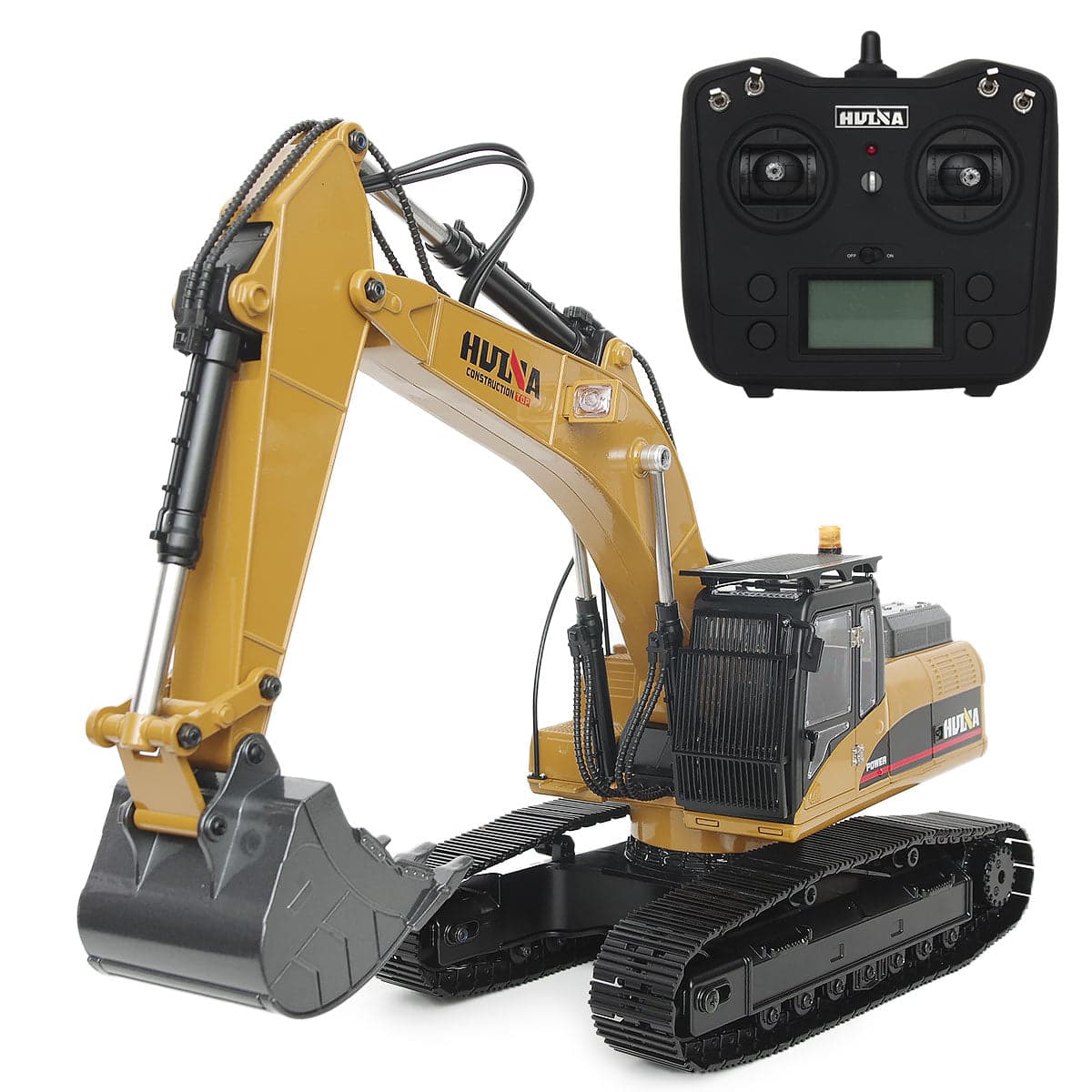
RTF is the complete package. The airframe is assembled, the electronics are installed and bound, and a transmitter is in the box. Most RTF models include a battery and a charger, though this is the one place manufacturers vary — always check the contents list rather than assuming.
What you still do: charge the pack, fit the wing if it ships detached, check the control surfaces move the right way, and set the centre of gravity. "Ready to fly" has never meant "throw it immediately" — a fifteen-minute pre-flight check is still the difference between a first flight and a first repair.
Buy RTF if this is your first aircraft, or you want a self-contained model that does not need to match anything you already own.
The catch: the included transmitter is usually a basic 4–6 channel unit tied to that model. Buy three RTF aircraft and you own three transmitters, each of which you will stop using the moment you upgrade to a decent radio.
BNF — Bind-N-Fly
BNF is an RTF without the transmitter. The airframe is built, the motor, ESC and servos are installed, and — importantly — a receiver is already fitted and ready to bind to a compatible radio you own.
That word "compatible" is doing the heavy lifting. A BNF receiver speaks one protocol. If the model ships with a Spektrum DSMX receiver, it binds to a DSMX transmitter and nothing else. A BNF aircraft bought without checking the protocol against your radio is an aircraft you cannot fly.
Buy BNF if you already own a transmitter on the matching protocol. It is the cheapest way to add aircraft to a hangar, because you are not re-buying a radio every time.
Check before you buy: the receiver protocol, the number of channels your radio needs to have, and whether a battery is included — usually it is not.
PNP — Plug-N-Play
PNP goes one step further back: built airframe, motor, ESC and servos fitted — but no receiver. You install your own, bind it, and set up the channel assignments yourself.
This is the difference between PNP and BNF, and it is the whole difference. PNP frees you from the manufacturer's receiver choice, which matters if you run a radio system that is not one of the big two, or if you want telemetry, a specific failsafe behaviour, or a receiver with more range than the stock unit.
Buy PNP if you have a preferred radio system and want the aircraft on your receiver rather than whichever one the factory fitted. Expect to spend an hour on setup: mounting the receiver, routing the aerials properly, checking servo direction and travel, and setting failsafe.
Worth knowing: some manufacturers use "PNP" loosely and ship models without a servo or two. Read the contents list.
ARF — Almost Ready to Fly
ARF is an airframe, and not much else. The structure is built and covered — the hard, slow, skill-dependent part is done — but you supply and install the entire power system: motor, ESC, servos, receiver, and often the propeller and spinner too.
ARF is where the term drifts most between manufacturers. Some ARFs include the motor mount and pushrods; some include nothing but the airframe and hardware bag. Larger glow and petrol ARFs may need a fuel tank, engine mount and throttle linkage on top.
Buy ARF if you want to choose the power system yourself — because you are building for a particular flying style, because you have electronics to reuse, or simply because assembling it is part of what you enjoy.
Budget honestly. An ARF that looks cheap next to a BNF rarely is once you have added a motor, ESC, four servos and a receiver. It is a better aircraft, tailored to you — but it is not the cheaper route.
Where kits fit in
Below ARF sits the traditional kit: laser-cut or die-crushed parts, plans, and a covering iron. You build the structure yourself over weeks rather than an evening. Kits are a different hobby to flying — deeply rewarding, but choose one knowing that is what you are buying.
Which should you actually buy?
- First aircraft, no gear at all: RTF. Get flying, learn what you like, then buy a proper radio.
- You own a transmitter already: BNF, provided the protocol matches. This is the sweet spot for most pilots.
- You are committed to a radio system: PNP. One receiver brand across the hangar makes failsafe and telemetry consistent.
- You want to specify the power system: ARF, and price the electronics before you order.
Three mistakes worth avoiding
- Assuming a battery is included. Only RTF reliably includes one, and even then not always. Check the contents list.
- Buying BNF without checking the protocol. The single most expensive mistake in this list, because the aircraft is otherwise perfect and completely unusable.
- Treating "ready to fly" as "no setup". Control surface direction, throws and centre of gravity still need checking on every model, however complete it arrives.
If you are unsure which version of a model suits your setup, tell us what transmitter you run and we will tell you what will bind to it. That is a faster conversation than a return.